
What is solar ROI?
To calculate ROI for a solar system, subtract the total system cost from your lifetime energy savings, then divide by the system cost and multiply by 100. The result tells you how much you earn back, as a percentage, over the life of the panels.
Solar return on investment (ROI) measures how profitable your panels are. Most homeowners and businesses also track the payback period: the number of years it takes for savings to cover the upfront cost.
The solar ROI formula
Solar ROI Formula
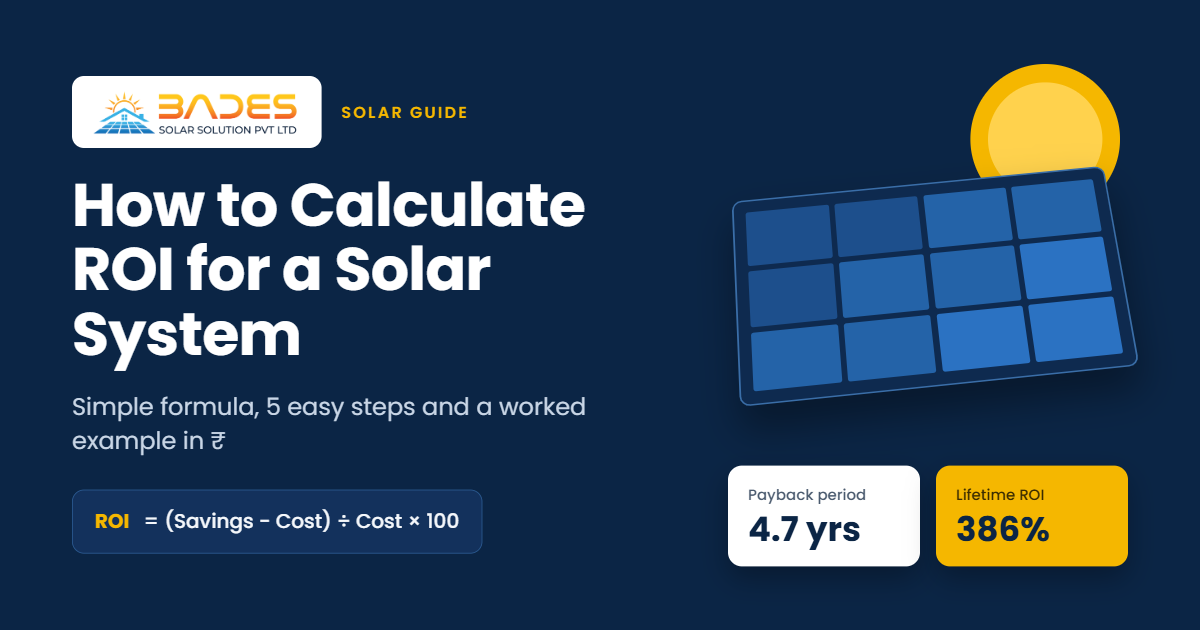
Solar ROI (%) = (Lifetime Savings − Total System Cost) ÷ Total System Cost × 100
Payback Period Formula
Payback Period (years) = Total System Cost ÷ Net Annual Savings
How to calculate solar ROI in 5 steps
- Find your total system cost: Add panels, inverter, mounting, installation, permits and grid connection fees. Subtract any subsidies or incentives you receive.
- Estimate annual energy production: Multiply system size (kW) by the yearly output per kW for your location. Your installer’s quote or a solar irradiance map gives this figure.
- Calculate annual savings: Multiply annual production (kWh) by your electricity rate per kWh. Deduct yearly maintenance and cleaning costs to get net annual savings
- Work out the payback period: Divide the total system cost by net annual savings.
- Calculate lifetime ROI: Multiply annual savings by the system lifespan (usually 25 years), adjust for panel degradation of about 0.5% per year, and subtract replacement costs such as a new inverter. Then apply the ROI formula.
Worked example: a 10 kW rooftop system
The figures below are illustrative. Replace them with the numbers from your own quote and electricity bill.
- System cost: A 5 kW rooftop system costs about ₹3,25,000. After the PM Surya Ghar subsidy of ₹78,000, your net cost is ₹2,47,000.
- Annual production: 5 kW × 1,400 kWh per kW = 7,000 kWh per year.
- Annual savings: 7,000 kWh × ₹8 per unit = ₹56,000. After ₹3,000 of yearly maintenance, net savings are ₹53,000.
- Payback period: ₹2,47,000 ÷ ₹53,000 = 4.7 years.
- 25-year savings: ₹56,000 × 25 years, reduced by 6% for average panel degradation, = ₹13,16,000. Subtract ₹75,000 maintenance and one ₹40,000 inverter replacement to get ₹12,01,000.
- Lifetime ROI: (₹12,01,000 − ₹2,47,000) ÷ ₹2,47,000 × 100 = about 386%.
In this example, the system pays for itself in under five years. It then delivers roughly ₹9.5 lakh in net profit, about 15% return per year.
What affects your solar ROI?
- Sunlight hours: more sun means more kWh and faster payback.
- Electricity tariffs: higher rates, and future rate increases, raise your savings.
- System quality: tier-1 panels and efficient inverters degrade more slowly.
- Net metering: exporting surplus power to the grid adds credits to your bill.
- Self-consumption: using power during daylight hours maximises savings.
- Maintenance: dust reduces output, so regular cleaning protects returns.
Frequently asked questions
What is a good ROI for solar panels?
A lifetime ROI above 150% and a payback period under 8 years is considered strong for most residential and commercial systems.
How long do solar panels take to pay for themselves?
Most residential systems in India pay back in 3 to 6 years, depending on cost, subsidy, sunlight and your electricity tariff.
Do solar panels increase property value?
Yes. Lower running costs make a property more attractive to buyers and tenants.
Should I include battery storage in my ROI?
Only if you buy one. Batteries add cost, so they usually lengthen the payback period unless your tariff rewards stored energy.
Conclusion
Calculating solar ROI takes five numbers: system cost, production, electricity rate, maintenance and lifespan. Run them through the formula above and you will know your payback period and lifetime profit before you sign a contract. For an accurate figure, request a site assessment and a quote based on your actual energy use.