

How to Verify an MNRE-Registered Solar Vendor Before You Pay Home > Blog Choosing a rooftop solar vendor should involve more than checking a logo, social-media page or low quotation. For a residential project under PM Surya Ghar, the consumer should verify that the vendor is listed for the relevant DISCOM and then separately evaluate the company’s technical capability, quotation, products, installation process and service commitment. The phrase “MNRE-approved vendor” is commonly used in conversation, but it can be misleading if it suggests that the government guarantees every installation. A more accurate check is whether the legal entity is currently registered or empanelled for the relevant programme and DISCOM on the official portal. Registration is an entry requirement, not a substitute for buyer due diligence. Step 1: Use the Official PM Surya Ghar Portal Open the PM Surya Ghar National Portal directly and use its registered-vendor information for your state and DISCOM. Do not rely only on a screenshot sent over WhatsApp, a search ad or a third-party directory. Portal listings and interfaces can change, so verify them at the time you are ready to select the vendor. For a home in Chh Sambhajinagar, confirm the electricity bill’s DISCOM details and search under the applicable Maharashtra distribution company. The vendor should appear under the exact legal entity used in the quotation and agreement. Step 2: Match the Legal Business Identity Exact company or firm name on the portal Name on the quotation, invoice and agreement GST registration details, where applicable Registered address and working contact information Bank-account beneficiary name used for payment Authorised representative dealing with the project A brand name can differ from a legal name, but the relationship should be clear and documented. Avoid transferring funds to an unrelated personal account merely because the salesperson says it is faster. Step 3: Confirm the Vendor Is Relevant to Your Application A vendor listing in another state, DISCOM or programme context may not establish eligibility for your application. Ask the vendor to show how it will be selected or linked within your own portal journey. The consumer should keep control of the registered mobile number, OTPs and login. Bades Solar is an empanelled vendor serving eligible residential rooftop customers in Chh Sambhajinagar. Customers should still follow the same verification process and match the portal entity with their formal documents. Step 4: Verify the Exact Modules and Inverter Do not accept “Tier 1 panel” or “subsidy panel” as the complete product description. The quotation should state the manufacturer, exact model, wattage, number of modules, total DC capacity, inverter make and capacity, and relevant product warranties. For a subsidy-linked project, confirm the applicable DCR requirement and check the exact model against current MNRE information where required. Our DCR vs Non-DCR guide explains why domestic content, ALMM status and product quality are related checks but not identical labels. Step 5: Demand a Detailed EPC Scope Site survey and electricity-bill assessment System capacity and generation assumptions Module and inverter specifications Mounting-structure material, height and fixing method DC and AC protection, cabling, earthing and labels Installation, testing and commissioning Net-metering and subsidy-document assistance Monitoring setup and customer handover Warranty responsibility and service contact Items excluded or charged separately Compare quotations line by line. A lower total can omit structure, protection devices, application fees, civil work, load enhancement, transport or after-sales responsibility. Step 6: Review Workmanship, Not Just Product Brands Solar modules are only one part of an on-grid system. Ask for recent residential installations that are comparable in roof type and capacity. With customer permission, review cable management, structure alignment, waterproofing approach, earthing, labelling and inverter placement. Ask who performs the installation, who supervises electrical work and who returns if an inspection observation or system fault occurs. A company with strong product brands but weak execution can still create long-term problems. Step 7: Read Warranty Terms Carefully Separate the module product warranty, module performance warranty, inverter warranty, structure or workmanship warranty and the EPC provider’s service obligation. A long number in a brochure does not necessarily cover labour, transport, replacement processing or every failure mode. Request written warranty documents and understand the claim route. Check whether the vendor assists with manufacturer claims or only hands over a helpline number. Step 8: Check the Payment Schedule Payment should be linked to clear milestones such as order confirmation, equipment delivery, installation and commissioning. Avoid paying the full amount solely against a verbal promise of immediate subsidy. Government assistance is subject to eligibility, compliant installation, documentation and DISCOM verification. The quotation or agreement should state taxes, cancellation terms, capacity changes, additional civil work, meter-related charges and responsibilities if the application needs correction. Step 9: Understand Who Controls the Portal Process The vendor may assist with forms and uploads, but the consumer should retain copies of the application, request ID, approvals, equipment records, invoice, inspection and commissioning documents. Never share an OTP without understanding the action being authorised. Our step-by-step net-metering guide explains the usual MSEDCL journey. For the financial-assistance workflow, review the PM Surya Ghar subsidy guide before signing. Red Flags to Watch Claims of guaranteed subsidy regardless of eligibility or equipment Pressure to pay immediately before portal verification Quotation without exact product models or total system capacity A portal screenshot that does not match the legal business name Promise that an ordinary on-grid system will run during every outage No written scope for net metering, safety equipment or after-sales service DCR, ALMM, BIS and “Made in India” used as interchangeable terms Refusal to issue a tax invoice or formal agreement Unrealistic generation or zero-bill guarantee without consumption analysis A Practical Vendor Verification Scorecard Registration Is the exact entity currently listed for the relevant state and DISCOM on the official portal? Technical proposal Does the system size follow consumption and roof findings, with identifiable products and a clear single-line design? Compliance Are DCR, ALMM, inverter, protection and documentation requirements addressed for this specific project? Execution Can the vendor demonstrate comparable installations and explain who will manage site
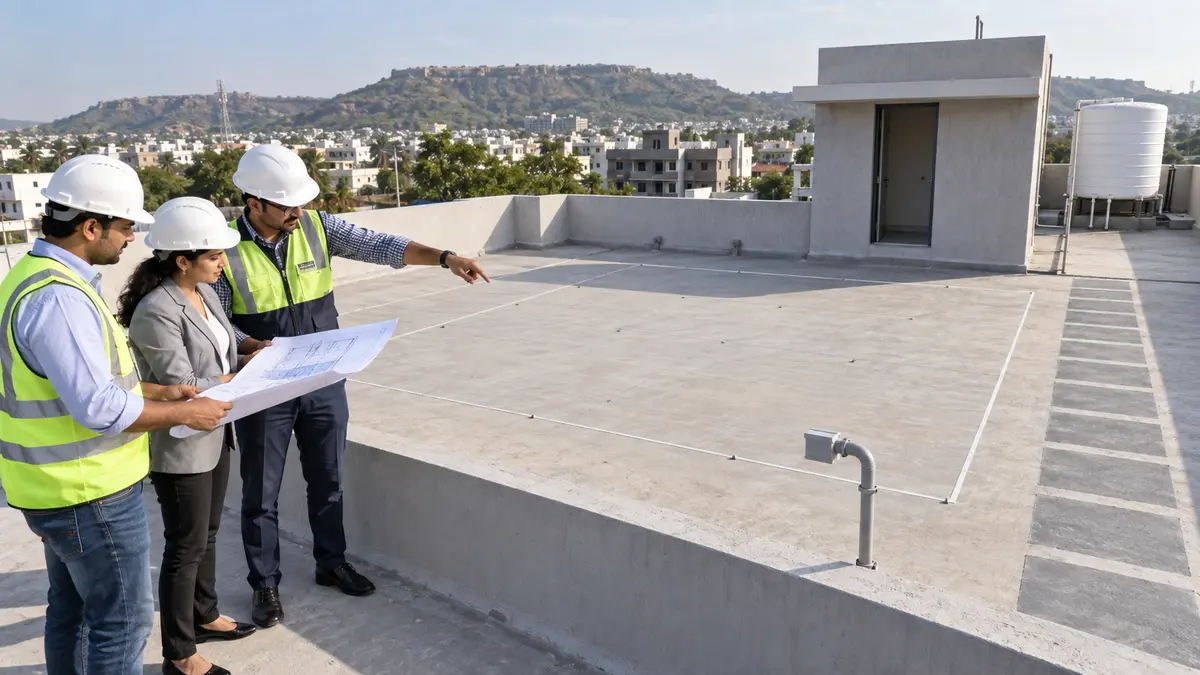
How to Design a Solar-Ready Roof Layout for Your New Bungalow Before Laying the Concrete
Samadhan Badebadessolar7211@gmail.comEdit Profile How to Design a Solar-Ready Roof Layout for Your New Bungalow Before Laying the Concrete Home > Blog Imagine standing on the terrace of your newly completed bungalow for the first time. The walls are freshly painted, the rooms are ready, and everything looks exactly as it was planned. Then you look up at the roof and realise that the ideal space for solar panels has been taken by a water tank, a staircase structure and a maze of plumbing lines. What could have been a simple solar installation now requires compromises, extra cable routing and possibly additional structural or waterproofing work. This situation can be avoided when a solar-ready roof layout is planned before the concrete slab is cast. Solar planning at the construction stage allows the architect, structural engineer, electrical consultant and solar EPC team to coordinate the roof area, equipment location, cable pathways, drainage and future expansion properly. Solar panels do not have to be purchased during construction; instead, the house can simply be prepared so that an on-grid solar system can be installed later with fewer modifications and less disruption. Start by Understanding the Future Electricity Requirement Solar planning should not be based only on the appliances being used today. A bungalow may have a much higher electricity requirement once it is occupied and fully equipped. Air conditioners, refrigerators, water pumps, kitchen appliances, televisions, computers, home-office equipment and other electrical devices should be considered. If an electric vehicle may be purchased in the future, that requirement should also be kept in mind. An approximate solar capacity range can be identified at the planning stage. The final system size should, however, be decided after actual electricity consumption, roof conditions and applicable requirements have been assessed. For an early understanding of panel quantity and approximate space requirements, the relationship between module wattage, panel count and available roof area can be reviewed through our 3 kW solar-panel guide. Actual panel dimensions, mounting requirements and clearances should always be confirmed before construction drawings are finalised. Reserve a Clear and Practical Solar Zone A solar array can usually be installed more efficiently when one large, unobstructed roof section is available. If the roof is divided into several small areas by tanks, staircases, pipes and decorative structures, the installation may become more complicated. A dedicated solar zone should therefore be marked on the architectural plan. Wherever possible, water tanks, stair headrooms, exhaust outlets, antennas, plumbing structures and unnecessary decorative elements should be positioned away from the proposed solar area. Future shading should also be considered. A tree planted close to the house, a neighbouring building or a future construction extension could eventually reduce the amount of sunlight reaching the modules. A proper shade assessment should not be limited to a single midday observation. Seasonal changes and different times of the day should also be considered so that the solar-ready roof layout remains useful over the long term. Give Proper Attention to Orientation and Panel Tilt There is no single roof orientation that will be ideal for every bungalow. South-facing exposure is often considered beneficial in India, but the final arrangement should be based on the actual site conditions. East-west panel arrangements can also be suitable for certain homes, particularly where roof space, daily electricity consumption, aesthetics, row spacing and shading conditions make that arrangement practical. For a flat reinforced-concrete roof, the required panel inclination can generally be created through the mounting structure. The entire roof slab does not necessarily have to be sloped specifically for solar panels. The final tilt and orientation should be selected after the roof has been assessed by a solar professional. Row-to-row shading, mounting height, wind exposure, maintenance access and overall roof usability should all be taken into account. Coordinate the Structure Before the Concrete Is Cast One of the most important stages of solar-ready construction is structural planning. The structural engineer should assess whether the proposed roof and supporting members are suitable for the intended solar mounting arrangement. The weight of the modules and mounting structure, maintenance loads, wind effects and proposed anchoring method should all be considered. If pedestals, foundations, inserts or sleeves are planned for the future solar installation, their positions should be coordinated before the slab is cast. Reinforcement should not be disturbed later simply because a solar mounting point was overlooked during construction. Any proposed penetration through the roof should also be discussed with the waterproofing professional. A small amount of coordination during construction can prevent much larger repair work after the house has been completed. Protect Waterproofing and Roof Drainage A solar-ready roof should not only provide sufficient panel space. It should also continue to perform properly as a roof. The following points should be considered during planning: Roof drains should remain completely accessible. Rainwater flow paths should not be blocked by mounting structures. Adequate slope should be provided to prevent water from collecting around pedestals. Any required roof sleeve or penetration should be properly waterproofed. Access should be maintained around drainage outlets for future inspection. Cable trays should not be positioned where they interfere with rainwater movement. Locations of concealed sleeves and other provisions should be documented before finishing work. Responsibility for solar installation and waterproofing should be clearly coordinated between the concerned professionals. This can help prevent confusion if water leakage is noticed near a mounting location at a later stage. Plan the Solar Electrical Route Before Plastering A dedicated conduit pathway can make a major difference to the appearance and serviceability of a future solar installation. Instead of allowing DC cables, communication cables or other wiring to be routed randomly across the finished building, a suitable pathway can be planned from the solar zone to the proposed inverter location. The route from the inverter to the main distribution board and metering area should also be considered. Conduit diameter, bends, pull boxes, cable segregation, fire-stopping requirements and spare capacity should be discussed with the electrical designer and solar EPC team. A draw wire can be left
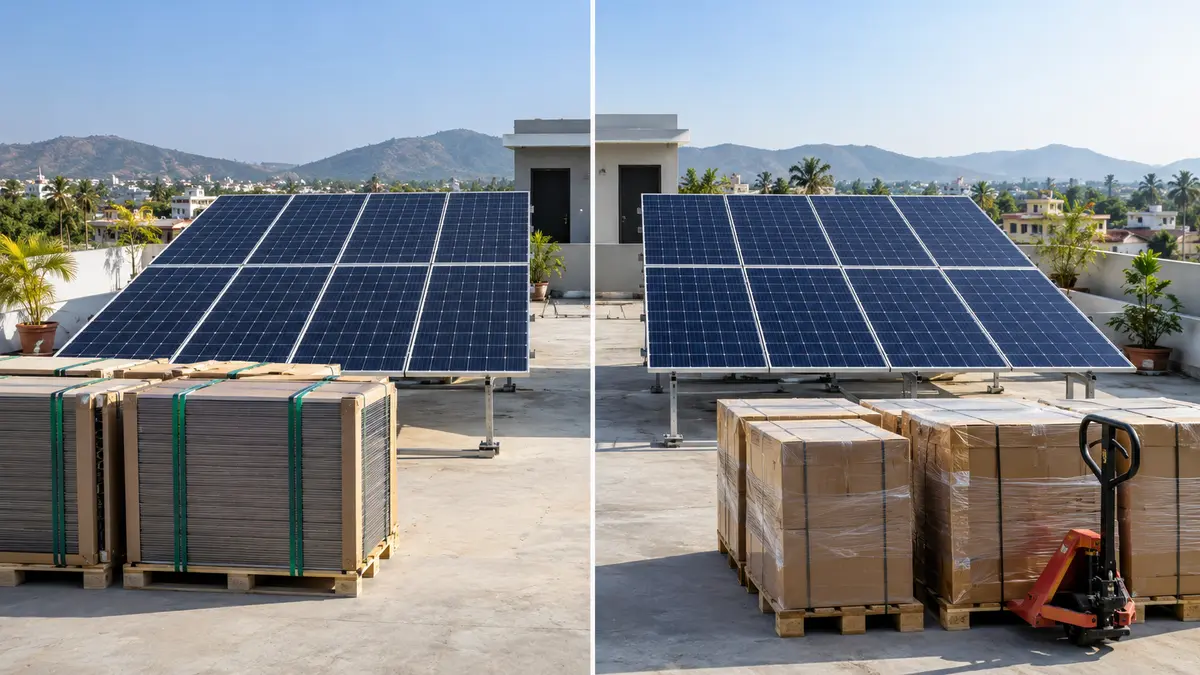
DCR vs Non-DCR Solar Panels: What Is the Difference and Which Should You Choose?
DCR vs Non-DCR Solar Panels: What Is the Difference and Which Should You Choose? Home > Blog DCR and Non-DCR are policy and sourcing classifications, not grades such as premium and ordinary. The distinction becomes important when a residential customer wants central financial assistance under PM Surya Ghar or when a project is governed by another scheme with domestic-content requirements. A buyer should therefore avoid choosing modules only from a price list. The correct decision depends on project type, subsidy intent, applicable rules, module model, warranty, efficiency, temperature performance, EPC design and long-term support. What Does DCR Mean in Solar Panels? DCR stands for Domestic Content Requirement. For schemes where DCR applies, the relevant solar cells and modules must meet the prescribed domestic-manufacturing conditions in India. The vendor must be able to provide the required traceability and certificates for the installed modules. For an eligible PM Surya Ghar residential installation claiming central financial assistance, DCR-compliant modules are required under the current scheme framework. The DCR Verification Portal developed by NISE supports traceability of domestically manufactured cells and modules used in government-supported schemes. What Are Non-DCR Solar Panels? Non-DCR modules do not meet the domestic-content condition required by the relevant subsidised scheme. They may be imported modules or modules assembled in India using imported cells. Non-DCR does not automatically mean poor quality, and DCR does not automatically prove superior generation. A private project that is not claiming applicable central assistance may have greater flexibility, subject to current laws, technical approvals, procurement rules and the project’s contract. A homeowner should decide only after confirming whether the subsidy remains part of the financial plan. DCR vs Non-DCR: Key Differences Manufacturing requirement DCR focuses on prescribed domestic origin for the cells and modules. Non-DCR modules fall outside that requirement, even when final assembly occurs in India. Subsidy eligibility DCR compliance is material for PM Surya Ghar installations claiming central financial assistance. Installing non-DCR modules can make an otherwise eligible residential project non-compliant for subsidy. Documentation and traceability DCR projects require supporting documentation and portal-aligned module records. Buyers should ask for the precise manufacturer, model, serial numbers, invoice description and DCR certificate process instead of accepting a verbal assurance. Product choice and price Non-DCR procurement can sometimes offer broader sourcing or a different price point. However, market prices change and should not be presented as a fixed per-watt difference. Compare the net project cost after subsidy eligibility, not merely the module price. Performance Energy generation depends on module technology, efficiency, degradation, temperature coefficient, shade, orientation, inverter matching and installation quality. DCR status alone does not establish how much electricity a panel will produce. DCR, ALMM and BIS Are Not the Same Thing These terms are often mixed together in sales discussions. DCR addresses domestic-content compliance. ALMM is the Approved List of Models and Manufacturers maintained by MNRE for applicable projects. BIS registration relates to conformity with specified Indian standards for covered products. One label should not be used as proof of all three. Before purchase, verify the exact module model rather than only the brand name. A manufacturer may have multiple models, and applicability can change as official lists are updated. Consult the current MNRE ALMM information and scheme documentation at the time of installation. Which Panels Should a Homeowner Choose? Choose DCR-compliant panels when: You are eligible for and intend to claim PM Surya Ghar central financial assistance The approved project or financing condition expressly requires DCR modules The selected vendor can provide traceable, scheme-compliant documentation The exact module model also satisfies other applicable technical requirements Consider Non-DCR panels only when: You have consciously decided not to claim the applicable subsidy The project is privately funded and current rules permit the selected equipment The EPC provider has compared lifecycle value, warranties and technical performance The absence of subsidy has been included in the financial comparison For many eligible residential customers, DCR is the practical choice because retaining subsidy eligibility can matter more than a lower upfront module price. For a non-subsidised project, the comparison should focus on delivered generation, reliability, warranty enforceability and total EPC value. Questions to Ask Before Signing a Quotation Is the quotation designed for a subsidy-linked or non-subsidised project? What is the exact module manufacturer, model and wattage? Are both the cells and modules compliant with the applicable DCR requirement? How will DCR traceability and certificate details be recorded? Is the exact model present on the current applicable ALMM list? What product and performance warranties apply, and who honours them? Does the invoice clearly identify the installed equipment? Will the same equipment appear in the portal, inspection and commissioning records? Common Misunderstandings “Made in India” always means DCR Not necessarily. A module assembled domestically may still use imported cells. Ask for scheme-specific DCR evidence. DCR panels always generate more DCR is not an efficiency rating. Compare technical datasheets and site design. Any Indian brand qualifies for subsidy Eligibility depends on the applicable rules, exact products, project records and installation process, not the nationality of the brand alone. ALMM and DCR are interchangeable They address different compliance questions. Verify both where the project requires them. How This Decision Fits into a Residential Solar Project Panel selection should happen after electricity-bill analysis, roof inspection and system sizing. Read how many panels a 3 kW solar system may require, then compare actual module dimensions and layout. If subsidy is part of the plan, review our PM Surya Ghar guide before finalising the quotation. Bades Solar provides on-grid residential solar solutions and supports eligible homeowners with system design, equipment selection, installation and applicable documentation. A local site survey by a solar company in Chh Sambhajinagar can identify whether the proposed panel choice fits the roof, inverter and financial objective. Frequently Asked Questions What is the simplest difference between DCR and Non-DCR panels? DCR modules meet the domestic-content requirement prescribed for relevant government-supported projects. Non-DCR modules do not meet that specific condition. Can I get PM Surya Ghar subsidy with Non-DCR panels? Under
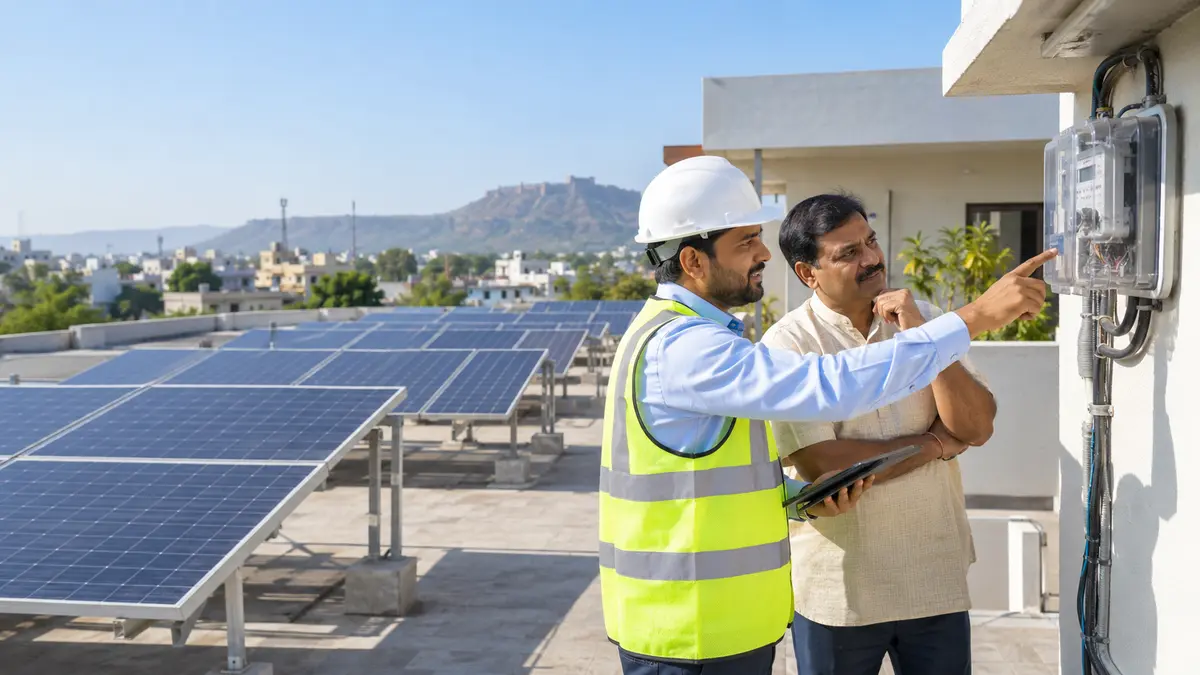
How to Apply for Net Metering in Chh Sambhajinagar: Step-by-Step Guide
How to Apply for Net Metering in Chh Sambhajinagar: Step-by-Step Guide Home > Blog A rooftop solar system does more than generate electricity during sunny hours. When an eligible on-grid system produces more power than the home is using, net metering provides the approved billing mechanism for recording electricity imported from and exported to the distribution network.For most residential consumers in Chh Sambhajinagar, the relevant distribution company is Maharashtra State Electricity Distribution Company Limited, commonly known as MSEDCL or Mahavitaran. The process is largely online, but it includes technical approval, installation records, metering and commissioning. This guide explains the usual sequence without presenting approval or timelines as guaranteed. What Is Solar Net Metering? A bi-directional meter separately records electricity drawn from the grid and eligible surplus solar electricity exported to it. Billing is then handled under the applicable Maharashtra regulations and MSEDCL procedures. Net metering does not mean every unit produced is paid to the consumer in cash, and it does not make an on-grid system operate during a power cut. A standard on-grid inverter shuts down when grid supply fails because of anti-islanding protection. Homeowners comparing system types can first read our guide to on-grid, off-grid and hybrid solar systems. Who Should Apply? A consumer planning an eligible grid-connected rooftop solar installation at the same premises as an active electricity connection should confirm the applicable arrangement before installation. The consumer name, number, sanctioned load, proposed solar capacity and property details must match the application and supporting records. Residential applicants seeking support under PM Surya Ghar should follow the National Portal journey and select a registered vendor. Consumers installing without central financial assistance should still follow the applicable MSEDCL connectivity and metering route. Requirements can differ for residential, housing-society, commercial and industrial connections. Documents to Keep Ready Latest electricity bill and consumer number Applicant identity and contact details Proof of ownership or lawful occupancy, where requested System capacity, module and inverter details Single-line diagram and technical specifications prepared by the EPC provider Sanctioned-load details and load-enhancement papers, if applicable Vendor quotation, agreement and installation records Bank details and cancelled cheque for subsidy processing, where applicable Photographs, certificates and commissioning documents requested by the portals The portal may ask for additional or updated records. Use the checklist shown in the live application rather than relying only on an old downloadable list. Step-by-Step Net-Metering Process in Chh Sambhajinagar 1. Review consumption, sanctioned load and roof feasibility Start with 12 months of electricity bills and a physical roof survey. The proposed capacity should reflect consumption, usable shadow-free space, sanctioned load and current regulatory limits. Correct sizing avoids a mismatch between the quotation, portal application and final installation. 2. Register on the appropriate portal For a subsidy-linked residential project, register on the official PM Surya Ghar portal using the state, DISCOM, consumer number, mobile number and email details requested. Maharashtra consumers may also be routed through MSEDCL’s rooftop solar systems. Save the application or request ID and use only the official portals. 3. Submit the rooftop solar application Enter the proposed plant capacity and consumer details carefully. A spelling error, wrong consumer number or mismatch in the connection holder’s name can delay processing. Upload clear, complete documents in the specified format. 4. Obtain the applicable feasibility or connectivity approval MSEDCL reviews the application under the current process. Do not treat a quotation or vendor visit as permission to commission the plant. Any requirement for sanctioned-load enhancement, network work or revised capacity should be resolved before final installation. 5. Select a registered vendor and freeze the technical design For PM Surya Ghar, select a vendor listed for the relevant DISCOM on the National Portal. Finalise the module, inverter, mounting structure, protection system, earthing, cable routing, warranties and project scope in writing. Bades Solar is an empanelled vendor and provides residential solar EPC support in Chh Sambhajinagar. 6. Complete installation and upload plant details After installation, the vendor submits the prescribed plant information, photographs and equipment records. Subsidy-linked installations must comply with applicable domestic-content and approved-product requirements. The equipment installed on the roof should match the invoice and portal records. 7. Apply for the net meter and inspection The metering request, agreement and commissioning records are processed through the applicable MSEDCL workflow. The site may be inspected for safety, protection, wiring, earthing, capacity and documentation. Correct any observation through the official process. 8. Meter installation, commissioning and billing After the required approvals and inspection are completed, the bi-directional meter is installed or activated and the system is commissioned. Keep copies of the agreement, inspection report, meter details, warranties, invoice and portal acknowledgement. Check the first few bills to confirm that import and export readings are being recorded. Common Reasons for Delay or Rejection Consumer name or number does not match the electricity connection Application capacity conflicts with sanctioned load or technical approval Incomplete documents, blurred uploads or inconsistent addresses Unregistered vendor selected for a subsidy-linked installation Installed module or inverter details differ from submitted records Missing protection, earthing, labels or single-line diagram Installation completed before required approval stages Bank or identity details entered incorrectly for subsidy processing Net Metering and PM Surya Ghar Are Connected, but Not Identical Net metering is the grid-connectivity and billing arrangement. PM Surya Ghar is a residential rooftop solar programme with its own eligibility, vendor, equipment, documentation and financial-assistance requirements. A project can therefore involve both workflows, but the terms should not be used interchangeably. Read our PM Surya Ghar subsidy guide for the complete residential scheme journey. How Bades Solar Supports the Process Bades Solar handles the on-grid residential EPC scope from bill assessment and roof survey to system design, installation, testing and after-sales support. The team also guides eligible customers through the applicable net-metering and subsidy documentation. Consumers should retain access to their own registered mobile number, portal login and submitted documents throughout the project. If you are evaluating rooftop solar, speak with a solar company in Chh Sambhajinagar before choosing capacity or submitting technical details. A site-specific
Solar for Housing Societies in Chh Sambhajinagar: Planning, Savings and Installation Guide
Solar for Housing Societies in Chh Sambhajinagar: Planning, Savings and Installation Guide Home > Blog Housing societies manage several shared electricity expenses every month. Lifts, water pumps, corridor lights, parking lights, security systems, society offices and other common facilities can create a significant recurring bill. Rooftop solar can help a society generate electricity for these common-area loads and reduce long-term dependence on grid power. However, a society solar project is different from installing panels for an individual home. It requires a clear load assessment, roof-right confirmation, member approval, technical feasibility, suitable metering and a transparent financial plan. This guide explains how housing society solar works in Chh Sambhajinagar, what the committee should evaluate and how to avoid common planning mistakes. How Does Solar Work for a Housing Society? Solar panels installed on the society’s terrace or another suitable common area generate direct-current electricity. An inverter converts it into usable alternating-current electricity. In a grid-connected system, the solar electricity supports the connected common-area load, while the grid supplies additional power when solar generation is insufficient. Eligible surplus generation may be exported according to the approved metering arrangement and prevailing regulations. A standard on-grid system normally shuts down during a power cut because of anti-islanding safety requirements. Solar may be connected to: The society’s common electricity meter Common facilities such as lifts, pumps and lighting A specifically approved metering arrangement Individual household connections only where the technical and regulatory structure permits The society should not assume that one rooftop plant will automatically reduce every flat owner’s individual bill. The connection and benefit-sharing model must be decided before installation. Which Housing Society Loads Can Solar Support? A correctly designed system can contribute towards common services such as: Lifts Borewell and water-transfer pumps Corridor and staircase lighting Parking-area lighting Security cabin and CCTV systems Access-control equipment Society office Clubhouse or common hall Sewage-treatment or water-treatment equipment EV-charging infrastructure, if included in the design Other daytime common loads The system does not permanently assign one panel to one appliance. It generates electricity according to sunlight, and that energy supports the active connected load. Why Housing Societies in Chh Sambhajinagar Are Considering Solar? Reduce recurring common-area electricity costs Common-meter bills are paid through society maintenance collections. Reducing grid consumption can improve the society’s long-term operating budget. Use an otherwise underutilised terrace A suitable shadow-free terrace can become an energy-generating asset while maintaining safe access for maintenance and essential building services. Create more predictable energy costs Grid tariffs may change over time. A solar plant allows the society to generate part of its electricity for many years, subject to system performance and maintenance. Support sustainability goals Solar reduces reliance on conventional grid electricity and demonstrates a practical clean-energy initiative to residents. Improve readiness for future loads Societies planning EV charging, additional pumps or upgraded facilities can include likely future consumption in the energy assessment. How to Estimate the Required Solar Capacity The correct capacity should be calculated from evidence, not from the number of flats alone. Two societies with the same number of apartments may have very different lift, pump and common-area consumption. The installer should review: At least 12 months of common-meter electricity bills Monthly unit consumption Daytime and evening load pattern Maximum demand or sanctioned load Lift and pump operating schedules Existing diesel-generator or backup arrangement Available rooftop area Shading from tanks, structures and nearby buildings Future common facilities and EV loads Metering and export rules As a simple example, a society using 2,500 units per month on common services cannot select capacity only by dividing annual consumption by twelve. Seasonal generation, system losses, sanctioned load and usable roof layout also matter. How Much Roof Space Is Needed? The usable area matters more than the total terrace area. Water tanks, staircases, lift rooms, parapet shadows, fire-safety routes, pipelines, antennas and maintenance passages can limit the panel layout. A preliminary planning range may be approximately 50–60 sq. ft. of usable shadow-free space per kW, including reasonable access and layout considerations. Therefore: System size | Indicative usable area 10 kW | Approximately 500–600 sq. ft. 20 kW | Approximately 1,000–1,200 sq. ft. 30 kW | Approximately 1,500–1,800 sq. ft. 50 kW | Approximately 2,500–3,000 sq. ft. These are not final engineering measurements. Higher-wattage panels, tilt, row spacing, roof orientation and structural requirements can change the layout. A physical survey and shadow study are essential. For a smaller-system example, read our guide explaining how many solar panels are needed for a 3 kW rooftop system. On-Grid, Off-Grid or Hybrid Solar for a Society? On-grid solar An on-grid plant is usually the most economical choice for reducing a society’s common electricity consumption where grid supply is reasonably stable. It normally does not require batteries and may support an approved net-metering arrangement. Off-grid solar An off-grid system uses batteries and operates independently from the grid. For a multi-storey housing society, powering lifts, large pumps and all common facilities through batteries can require substantial storage and careful engineering. Hybrid solar A hybrid system combines solar, grid power and battery storage. It can be designed to support selected essential loads during outages, but it costs more and needs precise load prioritisation. Committees should compare on-grid, off-grid and hybrid solar systems before assuming that rooftop solar automatically provides backup. Backup requirements should be evaluated separately from bill-reduction objectives. Can a Housing Society Receive PM Surya Ghar Subsidy? Current PM Surya Ghar guidelines provide Central Financial Assistance for eligible residential households and also include support for Group Housing Societies or Resident Welfare Associations for common facilities, subject to prevailing conditions. The national framework has indicated assistance for common facilities at ₹18,000 per kW, including EV-charging facilities, up to a prescribed aggregate capacity associated with the number of houses and subject to a maximum limit. The society must verify the current eligibility, capacity calculation, application route, metering structure and subsidy amount before proceeding. Subsidy should not be added to the financial model until eligibility is confirmed. The society should use the official PM Surya
PM Surya Ghar Yojana Subsidy in Chh Sambhajinagar: A Complete Homeowner’s Guide
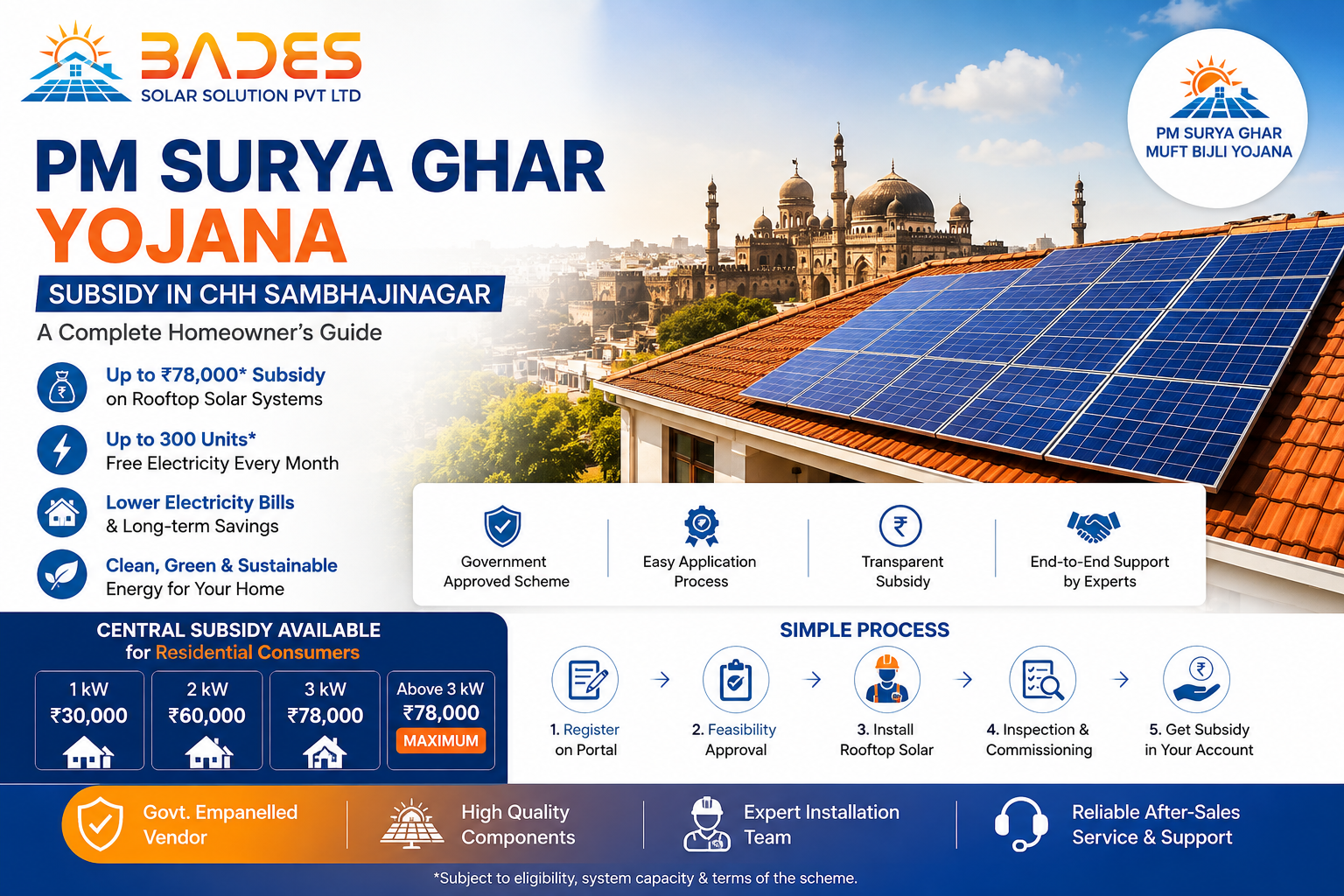
PM Surya Ghar Yojana Subsidy in Chh Sambhajinagar: A Complete Homeowner’s Guide Home > Blog Installing rooftop solar can reduce a household’s dependence on grid electricity, but the initial investment often influences the decision. The PM Surya Ghar: Muft Bijli Yojana helps eligible residential consumers install grid-connected rooftop solar through Central Financial Assistance, commonly called the solar subsidy. The scheme is designed for residential electricity consumers. It does not mean that every applicant automatically receives ₹78,000 or 300 free units every month. The subsidy depends on the approved system capacity and successful completion of the prescribed process. Actual electricity generation and bill savings depend on the rooftop, sunlight, system design, electricity use and applicable billing rules. Bades Solar Solution Pvt. Ltd. is a government-empanelled vendor under the PM Surya Ghar programme. We support eligible homeowners in Chh Sambhajinagar with site assessment, system design, installation and guidance through the required subsidy and net-metering process. What Is the PM Surya Ghar: Muft Bijli Yojana? PM Surya Ghar: Muft Bijli Yojana is a Government of India programme that promotes grid-connected rooftop solar for residential households. Eligible consumers apply through the National Portal for Rooftop Solar, select an empanelled vendor and complete the required installation and verification stages. The expression “up to 300 units of free electricity” refers to the potential for a suitably sized rooftop system to generate electricity for household use. It is not a fixed monthly cash benefit or a universal generation guarantee. A home’s result depends on system capacity and operating conditions. How Much Subsidy Is Available? The national portal currently displays the following Central Financial Assistance for eligible residential rooftop systems: System capacity | Indicative central subsidy 1 kW | ₹30,000 2 kW | ₹60,000 3 kW | ₹78,000 Above 3 kW | ₹78,000 maximum The calculation is ₹30,000 per kW for the first 2 kW and ₹18,000 for the additional third kW. The central subsidy is capped at ₹78,000 for a residential system of 3 kW or more under the current structure.These figures are subject to the prevailing scheme guidelines. Consumers should verify the current amount and eligibility on the official PM Surya Ghar portal before finalising a project. An on-grid system generally includes: The scheme primarily applies to eligible residential electricity consumers installing grid-connected rooftop solar. A consumer generally needs: A valid residential electricity connection A suitable rooftop or legally permitted installation area An application submitted through the official portal Technical feasibility approval from the relevant DISCOM Installation through a vendor empanelled for the programme Scheme-compliant equipment and installation Inspection and commissioning as required Correct identity and bank information for subsidy processing Commercial and industrial consumers should not assume that the residential subsidy applies to their projects. Their solar systems can still deliver financial benefits, but the economics and approval routes are different. Why Does an Empanelled Vendor Matter? The programme requires consumers to select a registered or empanelled vendor through the official process. Empanelment confirms that the vendor is listed for scheme execution; however, homeowners should still evaluate the proposed design, equipment, quotation, warranty and after-sales support.As a government-empanelled PM Surya Ghar vendor, Bades Solar helps eligible customers understand the technical and procedural stages. Our role includes assessing whether the roof and electricity consumption justify the proposed capacity, preparing a suitable design and completing installation according to the approved scope.A vendor should never guarantee subsidy credit before the application, installation and verification conditions are completed. Final approval and disbursement depend on the competent authorities and the consumer’s compliance with the scheme. Step-by-Step PM Surya Ghar Application Process Register on the official portal Visit the National Portal for Rooftop Solar and register using the required consumer and electricity-connection information. Make sure the name, consumer number, DISCOM and contact details match the supporting records. Submit the rooftop solar application Enter the requested property and electricity details. Incorrect consumer information or a mismatch between documents can delay the process. Obtain technical feasibility approval The DISCOM assesses whether the proposed grid-connected system can be approved for the electricity connection. Do not begin a subsidy-dependent installation before understanding the applicable approval sequence. Select an empanelled vendor Choose a vendor available through the official process. Compare the total capacity, panel and inverter specifications, mounting structure, protection systems, warranties and service scope not only the lowest quotation. Complete the site survey and system design The installer should review the previous electricity bills, sanctioned load, usable shadow-free area, roof strength, orientation, access and future electricity needs. Homeowners can also read our guide on how many panels are required for a 3 kW solar system before discussing the layout. Install the rooftop solar system The system should follow the approved design and applicable technical requirements. Government-assisted and net-metering projects must use eligible products under prevailing rules, including applicable ALMM requirements. Complete inspection and commissioning After installation, the required information and documents are submitted. The relevant authority or DISCOM completes the prescribed inspection, metering and commissioning process. Submit bank details and complete subsidy formalities Accurate bank and identity details are essential. The subsidy is processed only after successful completion and verification of the required stages. Documents Commonly Required The portal or DISCOM may request documents such as: Recent electricity bill Consumer or connection details Identity proof Address or property-related information Applicant photograph where required Bank-account information and cancelled cheque Installation and commissioning documents Vendor invoice and system details Net-metering or inspection-related records The exact list can vary. Follow the current portal and DISCOM instructions rather than relying on an old checklist. Advantages of an Off-Grid Solar System Subsidy should not be the only basis for choosing a system. A 3 kW system may receive the maximum central subsidy under the current structure, but it is not automatically the correct size for every home. The recommendation should consider: Average monthly electricity consumption Daytime usage Sanctioned load Usable shadow-free roof area Panel wattage and layout Future appliance or EV requirements Budget after subsidy Net-metering feasibility If your priority is lowering electricity consumption without battery backup, an on-grid
How Many Solar Panels Do You Need for a 3 kW Solar System?
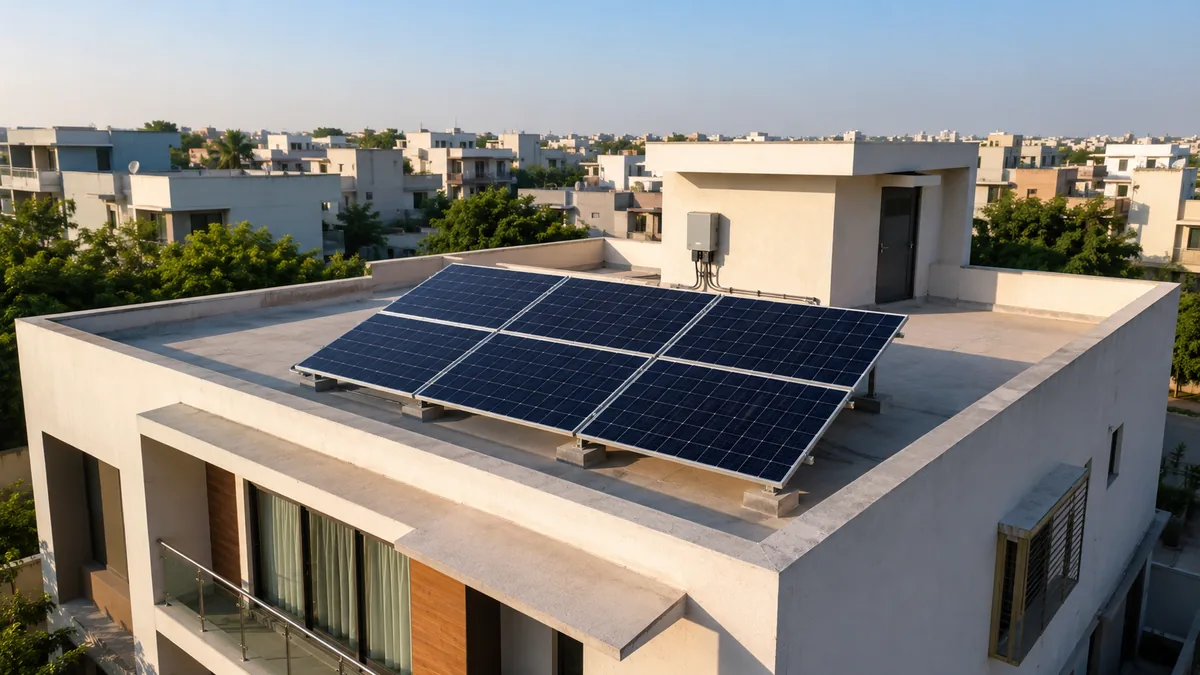
How Many Solar Panels Do You Need for a 3 kW Solar System? Home > Blog A phone call is usually where it begins. An electricity bill is held up to the light one more time, and a question is quietly asked: is it finally time to go solar? For most homeowners in Chhatrapati Sambhajinagar, the very next question that follows is a practical one: how many solar panels are required for 3kW, since a 3kW system is often the size that gets recommended first for a typical household. It sounds like it should have one neat answer. A number is expected, a figure that can be written down and shared with family. But as this blog will show, the honest answer is layered, it depends on the wattage chosen, the roof that is available, and the electricity habits of the home itself. Rather than handing over a single number and walking away, this guide has been built to walk through the entire story, the way a good rooftop solar company in Ch Sambhajinagar would during an actual site visit. The Quick Number First Since the question is usually asked before anything else, it is answered first. The number of panels needed is calculated by dividing the required system size by the wattage of a single panel: Number of panels = System capacity (in watts) ÷ Wattage of one panel For a 3kW (3,000-watt) system, this is how the math typically works out: Panel Wattage Calculation Panels Required (approx.) 400 W 3,000 ÷ 400 8 panels 450 W 3,000 ÷ 450 7 panels 500 W 3,000 ÷ 500 6 panels 540 W 3,000 ÷ 540 6 panels 550 W 3,000 ÷ 550 6 panels Wherever a fraction is produced by this division, the number is rounded upward, since a partial panel cannot be installed. In most cases, it can be said that a 3kW solar system typically requires between six and eight solar panels, depending on the wattage that is finally selected. That said, this table should be treated as a starting point rather than a final design. A number of other factors are involved before a rooftop is actually fitted with panels and those factors are explored next. Why the Same 3kW Isn’t Always Built the Same Way? It might seem odd that two homes, both wanting a 3kW system, could end up with different numbers of panels on their roofs. Yet this is exactly what tends to happen, and it happens for reasons that are worth understanding. 1. The Wattage of the Panel Selected Every solar panel carries a rated output under standard test conditions. When higher-wattage panels are chosen, fewer of them are needed to reach the same total capacity. For instance, six panels rated at 500W each produce the same nominal 3,000W as eight panels rated at 450kw. Both setups are described as 3kW systems, yet the panel count and the physical footprint on the roof are noticeably different. 2. The Roof Space That Is Actually Usable A roof may look spacious in a photograph, yet a large part of it is often unusable once water tanks, staircases, parapet walls, service pipes, and shadows from nearby structures are accounted for. As a general planning guide, around 50 to 60 square feet of shadow-free, usable rooftop space per kW is typically required, once mounting angles and maintenance access are factored in. For a 3kW system, this translates to roughly: 3 × 50–60 = 150 to 180 square feet The exact figure is confirmed only after a physical site survey is carried out, since panel dimensions, row spacing, tilt angle, and orientation all influence how many panels can actually be accommodated. 3. The Efficiency and Dimensions of the Module Two panels rated at a similar wattage are not always built the same. Differences in cell technology and efficiency mean that a smaller, high-efficiency panel can sometimes generate as much power as a larger, less efficient one. On rooftops where space is limited, this becomes an important consideration, one that is best discussed under the broader topic of solar panel efficiency. 4. Shading and Roof Orientation Persistent shade cast by an overhead tank, a neighbouring building, or even a tall tree can quietly reduce a system’s output over the course of a year. This is why a shadow analysis is usually recommended instead of relying only on rooftop photographs or rough measurements when the installation is being planned. 5. Inverter Compatibility The inverter chosen for the system must be matched to the total panel capacity, string voltage, and current. Simply dividing 3,000 watts by a chosen panel’s wattage gives a fair estimate, but it does not replace a proper engineering design one where the inverter, wiring, and safety components are all considered together. Is a 3kW System Actually the Right Fit? It should not be assumed that every home needs a 3kW system merely because it is a commonly advertised size. Before this capacity is finalised, a few things are usually reviewed by an installer: The last twelve months of electricity bills Average monthly and daytime unit consumption The sanctioned electrical load of the property The rooftop area that is genuinely available Plans for future appliances, such as air conditioners, water pumps, or an electric vehicle charger Whether battery backup will be needed The applicable PM Surya Ghar Yojana subsidy, where eligible If a system is undersized, electricity bills are not reduced by much. If it is oversized without matching consumption, the financial benefit may take longer to be realised. This is precisely why a personalised assessment is recommended over a one-size-fits-all number a service typically offered as part of residential solar consultations. What Can Be Powered by a 3kW System? Electricity generated by solar panels is not assigned to specific appliances, it simply flows into the home’s overall electrical load. Depending on the time of day and available sunlight, a 3kW system can typically contribute toward: Fans, lights, and small electronics Refrigerators and televisions Washing machines and
On-Grid vs Off-Grid vs Hybrid Solar Systems: Which Is Best for Sambhajinagar Homes?
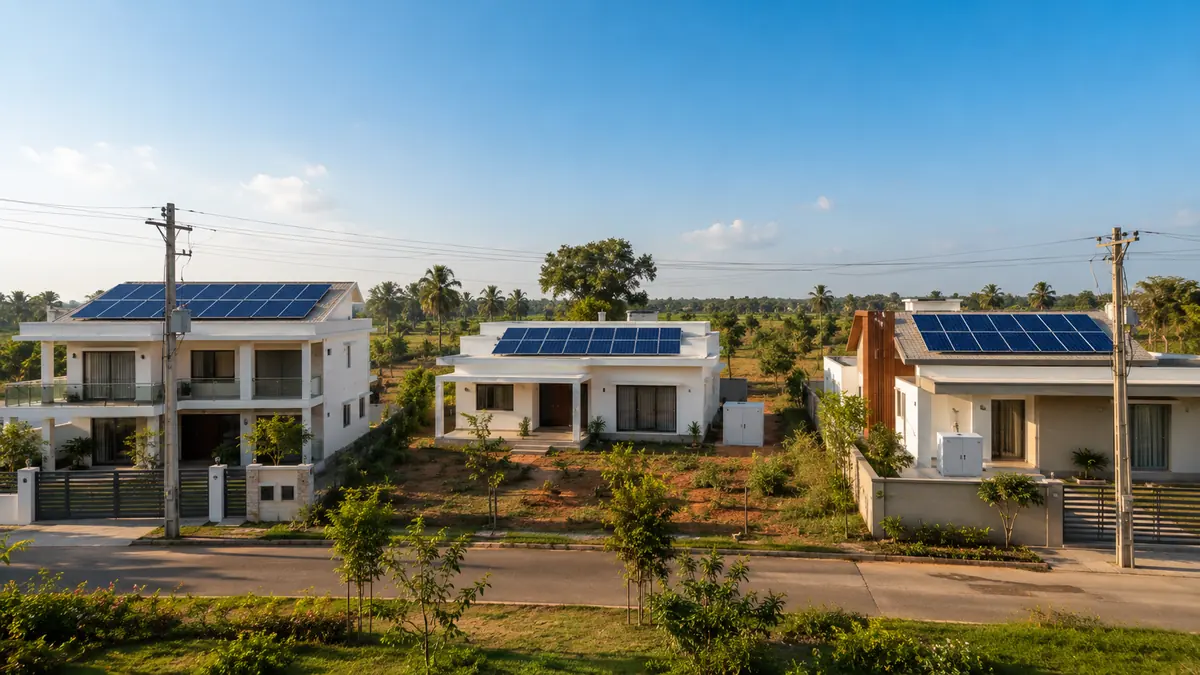
On-Grid vs Off-Grid vs Hybrid Solar Systems: Which Is Best for Sambhajinagar Homes? Home > Blog Choosing the right type of solar system is as important as selecting suitable solar panels or an experienced installer. Homeowners frequently compare solar panel on-grid vs off-grid systems without fully understanding how they work, what happens during a power cut and whether a battery is required. On-grid, off-grid and hybrid solar systems all generate electricity from sunlight, but they manage the generated power differently. The right option for your property depends on grid availability, frequency of power cuts, electricity consumption, budget and need for backup power. This guide helps homeowners in Chhatrapati Sambhajinagar select a suitable solution. What Is an On-Grid Solar System? An on-grid solar system, also known as a grid-tied solar system, is connected to the local electricity distribution network. Solar panels generate electricity during the day, and this electricity is first used to operate appliances within the property. If the solar system produces more electricity than the property consumes, the excess generation may be exported to the grid through an approved net-metering arrangement. When solar generation is insufficient, such as at night or during cloudy conditions, electricity is drawn from the grid. An on-grid system generally includes: Solar panels Grid-tied inverter Mounting structure DC and AC protection equipment Bi-directional or net meter Monitoring system Electrical cabling and earthing Grid-connected rooftop solar is the primary model supported under India’s residential rooftop solar programmes. Subsidy eligibility, approved equipment and installation requirements remain subject to the applicable government scheme and DISCOM verification. MNRE’s Grid-Connected Rooftop Solar Programme provides the governing framework. Advantages of an On-Grid Solar System Benefits Usually has a lower initial investment because batteries are not required Can reduce dependence on grid electricity during solar-generation hours Allows eligible surplus generation to be exported under net-metering rules Requires less battery-related maintenance Suitable for homes with a stable electricity connection Commonly eligible for applicable residential rooftop subsidy schemes, subject to current rules Provides straightforward performance monitoring Key limitation A standard on-grid solar system normally shuts down during a grid failure. Anti-islanding protection prevents solar electricity from flowing into power lines during utility repairs. Ordinary on-grid solar panels do not automatically provide electricity during a power cut. Homeowners needing backup should consider a properly designed hybrid system or a separate backup solution. What Is an Off-Grid Solar System? An off-grid solar system operates independently of the public electricity grid. It generates solar electricity and stores unused power in a battery bank for use at night, during cloudy conditions or when solar generation is lower than demand. A typical off-grid system includes: Solar panels Off-grid inverter Battery bank Charge controller where applicable Mounting structure Protection equipment Monitoring and electrical systems Off-grid solar is mainly useful where a grid connection is unavailable, unreliable or impractical. The Ministry of New and Renewable Energy also describes off-grid applications as particularly relevant to areas where grid power is unavailable or unreliable. Advantages of an Off-Grid Solar System Benefits Can operate without a grid connection Provides stored electricity during power cuts Suitable for farms, remote homes and isolated properties Offers greater independence from electricity-distribution interruptions Can be designed for essential loads such as lights, fans, pumps and appliances Limitations Higher initial investment because batteries are required Battery capacity must be carefully calculated Batteries have a shorter life than solar panels and eventually require replacement Poor system design can result in inadequate backup Excess electricity may be wasted when batteries are fully charged Requires closer monitoring of electricity usage May need a larger solar array to generate and store sufficient energy An off-grid system should not be selected simply because a homeowner wants lower electricity bills. It is more suitable when energy independence and backup are the main priorities. What Is a Hybrid Solar System? A hybrid solar system combines features of an on-grid system with battery storage. It remains connected to the electricity grid while storing part of the solar electricity in batteries.Depending on the system design, solar power can be used to: Operate household appliances Charge the battery Export eligible excess power to the grid Supply selected backup loads during an outage Advantages of a Hybrid Solar System Benefits Provides backup for selected appliances during power cuts Uses solar generation, batteries and the grid together Offers greater flexibility in managing electricity Can reduce reliance on grid power Allows stored solar energy to be used after sunset Suitable for properties that experience recurring power interruptions Limitations Costs more than a standard on-grid system Requires batteries and compatible hybrid equipment System design and load prioritisation are more complex Batteries require eventual replacement Backup time depends on battery capacity and connected load Not every appliance can run during an outage unless the system is designed accordingly A hybrid system does not provide unlimited backup. The installer must identify essential loads and calculate the required battery capacity. On-Grid vs Off-Grid vs Hybrid Solar System Factor On-Grid Off-Grid Hybrid Grid connection Required Not required Required Battery Normally not required Required Required Works during a power cut Normally no Yes Yes, for designed backup loads Initial investment Generally lowest Higher Usually highest Net-metering potential Yes, subject to approval No Possible, subject to design and approval Maintenance Lower Higher due to batteries Moderate to high Best suited for Properties with a stable grid Remote or poorly connected properties Grid-connected properties needing backup Energy management Solar and grid Solar and battery Solar, battery and grid Which Solar System Is Best for Sambhajinagar Homes? There is no single system that is ideal for every property. The right choice depends on electricity consumption, grid reliability, backup requirements and budget. ON Choose On-Grid Your property has a reliable electricity connection, your main objective is reducing grid electricity consumption, backup is not essential, and you want a comparatively economical rooftop solar solution. OFF Choose Off-Grid Your property has no dependable grid supply, you need electricity in a remote or rural area, and energy independence is more important than exporting surplus electricity.